


Best Locksmith Services in Arleta: 2026 Guide
Table of Contents
What to Expect From Locksmith Services in Arleta
How to Choose a Reputable Locksmith
Step 1: Verify the license, not just the claim
Step 2: Confirm insurance and bonding
Step 3: Screen for identity and background
Step 4: Recognize the common locksmith scams
Step 5: Read reviews the right way
Step 6: Get the quote in writing before work begins
Understanding Locksmith Cost and Pricing
The four components of a locksmith bill
Factors that change the final price
Typical cost ranges to expect
How to compare quotes fairly
Red flags in pricing
What transparent pricing looks like
Residential Locksmith Services Available
Commercial Locksmith Solutions
Alternatives to Roadside Assistance for Lockouts
Emergency Response and Service Area Coverage
Frequently Asked Questions
Last Updated: October 5, 2026
What to Expect From Locksmith Services in Arleta
Finding the best locksmith services in Arleta means knowing what's available and what to check before you call.
The best locksmith services in Arleta combine speed with reliability. A licensed, insured locksmith with documented experience beats a roadside service every time, response time matters, but not at the cost of quality or inflated pricing.
At Plaza Lock, we've spent over 30 years building relationships with property owners across Los Angeles and surrounding counties.
How to Choose a Reputable Locksmith
The difference between a reputable locksmith and an overpriced one comes down to licensing, insurance, and pricing transparency before work starts. A claim of "licensed and insured" is only as good as the paperwork behind it.
Step 1: Verify the license, not just the claim
Ask for the locksmith's license number before agreeing to service. Some jurisdictions require locksmith businesses to register with a state or local consumer protection agency, and some require a separate license. A legitimate operator gives you the number without hesitation.
Once you have it, verify it yourself:
Check your state's consumer protection or professional licensing database for status, expiration date, and disciplinary actions.
Confirm the name on the license matches the truck, invoice, and phone number you called. Mismatches are a red flag.
Ask whether the dispatched technician is licensed or working under the company's license, and get their name before they arrive.
Watch Out If a locksmith refuses to provide a license number, gives a number that doesn't match any public record, or pressures you to skip verification "because it's an emergency," end the call. A real emergency is exactly when scam operators count on you not checking.
Step 2: Confirm insurance and bonding
Insurance protects you if a locksmith damages your door, frame, or hardware. Ask for a certificate of insurance (COI) showing current general liability coverage. Bonding is separate, it protects you against theft by an employee. If the business can't produce an active COI on request, you accept the financial risk of damage yourself.
Step 3: Screen for identity and background
You're letting a stranger work on your home's entry point. Reputable companies run background checks on technicians. Ask directly: "Is the technician coming to my home background-checked, and can you tell me their name?"
When the technician arrives, look for:
A marked vehicle or uniform with the company name that matches your quote.
A business card or ID that matches the name you were given.
A written estimate or work order before any work begins.
Step 4: Recognize the common locksmith scams
A few patterns show up repeatedly in consumer complaints:
The bait-and-switch quote. A very low phone quote that balloons once the technician is on site and your door is open. Get an itemized estimate in writing before work starts.
Drilling as a first resort. A legitimate locksmith tries non-destructive entry first. A technician who immediately reaches for a drill on a lock that could be picked or bypassed is often creating billable damage.
Unmarked vehicles and rotating phone numbers. Scam operations use generic names, unmarked cars, and call-center numbers. A local, established business has a consistent name, address, and vehicle.
Cash-only demands. Legitimate businesses accept cards and provide itemized receipts. A cash demand with no receipt makes charges hard to dispute later.
Step 5: Read reviews the right way
Read reviews critically. Look for ones mentioning the specific service you need (lockout, rekey, car key programming) and whether the final price matched the quote. A cluster of same-day five-star reviews is less informative than a few detailed, dated ones. Check whether the business responds to negative reviews professionally, that signals accountability.
Step 6: Get the quote in writing before work begins
Ask for an itemized estimate separating the service call fee, labor, and parts. Confirm whether it's flat rate or hourly, whether there's a minimum charge, and whether after-hours rates apply. A trustworthy locksmith confirms this in writing or by text before dispatching.
Key Takeaway Verification is a five-minute process: get the license number, confirm it against a public record, ask for the insurance certificate, get the technician's name, and insist on a written itemized estimate. Any locksmith who resists any of those steps is telling you something important.

Understanding Locksmith Cost and Pricing
Most locksmith pages say pricing "varies" and ask you to call. Here's a breakdown of the components of a locksmith bill, what moves each one, and how to compare quotes fairly.
The four components of a locksmith bill
Nearly every locksmith invoice is built from four line items. Ask any provider to quote each one separately.
Service call fee (trip or dispatch fee). A flat charge for sending a technician, covering travel and the first minutes on site. Most likely to change by time of day.
Labor. Either a flat rate for a defined job (a standard residential lockout) or hourly for open-ended work like a master key system. Ask which model the provider uses.
Parts and materials. Locks, cylinders, keys, blanks, transponder chips, and hardware, usually billed at a markup.
After-hours or emergency surcharge. A premium for nights, weekends, and holidays, normal in the industry, but it must be disclosed before dispatch.
Factors that change the final price
Time of day. A weekday-morning lockout is cheapest; nights, weekends, and holidays carry a surcharge.
Type of lock. Standard residential pin-tumbler is the baseline. High-security cylinders, smart locks, and commercial hardware cost more in parts and labor.
Destructive vs. non-destructive entry. Picking or bypassing is faster and cheaper. Drilling destroys the cylinder and adds a replacement cost.
Key type. A standard house key blank is cheap. Transponder-chip car keys, laser-cut sidewinder keys, and key fobs cost substantially more due to the blank, chip, and programming equipment.
Distance and coverage area. A nearby provider may charge a lower trip fee than one driving across the region.
Access complexity. A second-story door, a gate behind a locked fence, or a vehicle in a parking structure adds labor time.
Typical cost ranges to expect
Exact numbers depend on your market and provider, but these relative ranges are a useful sanity check when comparing quotes. Treat them as order-of-magnitude guidance, not fixed prices.
Service | Relative cost | What drives the price |
Standard residential lockout | Lowest | Trip fee plus flat labor; non-destructive entry |
Rekey a single lock | Low | Labor plus new pins; no new hardware |
Replace a standard lock | Low to moderate | Labor plus the cost of the lock itself |
Duplicate a standard house key | Very low | Key blank cost only |
Duplicate or program a car key | Moderate to high | Blank, transponder chip, and programming time |
Install a smart lock or keypad entry | Moderate | Labor plus hardware; may require wiring or app setup |
Master key system (commercial) | High | Design time, multiple cylinders, and installation labor |
Custom gate fabrication | Highest | Materials, welding, hardware, and skilled labor |
Pro Tip When you call for a quote, give the dispatcher three details: the type of lock, whether you need entry or replacement, and your exact address. Those three answers let a reputable company give you a realistic range instead of a meaningless one.
How to compare quotes fairly
Two quotes for "a lockout" aren't comparable if one includes the trip fee and the other doesn't, or if one assumes non-destructive entry and the other assumes drilling. Ask each provider to itemize the service call fee, labor, and parts; whether the quote is flat or can change on site and why; whether after-hours rates apply now; and whether a replacement lock is included if drilling is required. Get it in writing before dispatch.
Red flags in pricing
A phone quote dramatically lower than every other quote you received, the classic bait-and-switch setup.
A refusal to quote over the phone, combined with pressure to "just get someone out there."
A final bill higher than the quote with no explanation of what changed.
A demand for cash only, with no itemized receipt.
What transparent pricing looks like
A professional locksmith tells you the service call fee, labor rate, and likely parts cost before arriving, confirms any after-hours surcharge, puts it in writing, and explains before drilling why it's necessary and what the replacement will cost.
Key Takeaway You do not need to know the exact price of every locksmith service. You need to know the four components of the bill, the factors that move each one, and how to get an itemized quote in writing. That is enough to tell a fair quote from a trap.
Residential Locksmith Services Available
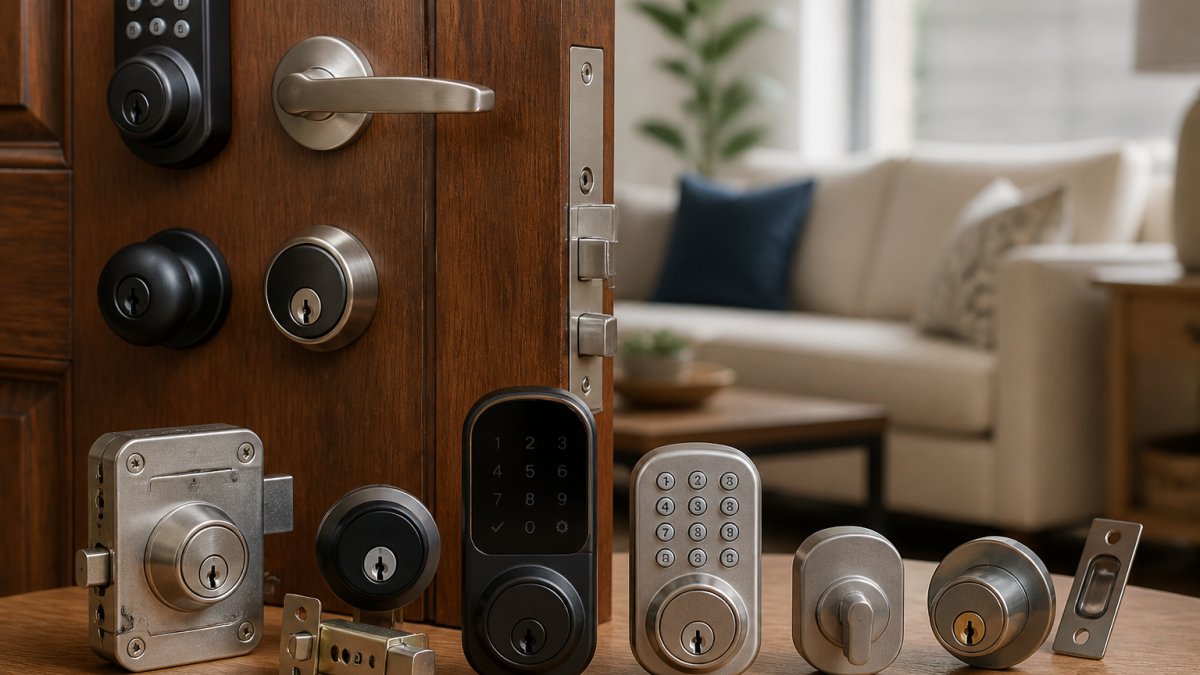
Residential locksmith services cover everything from getting back into your home to upgrading security.
Lockout assistance is the emergency service most people think of first.
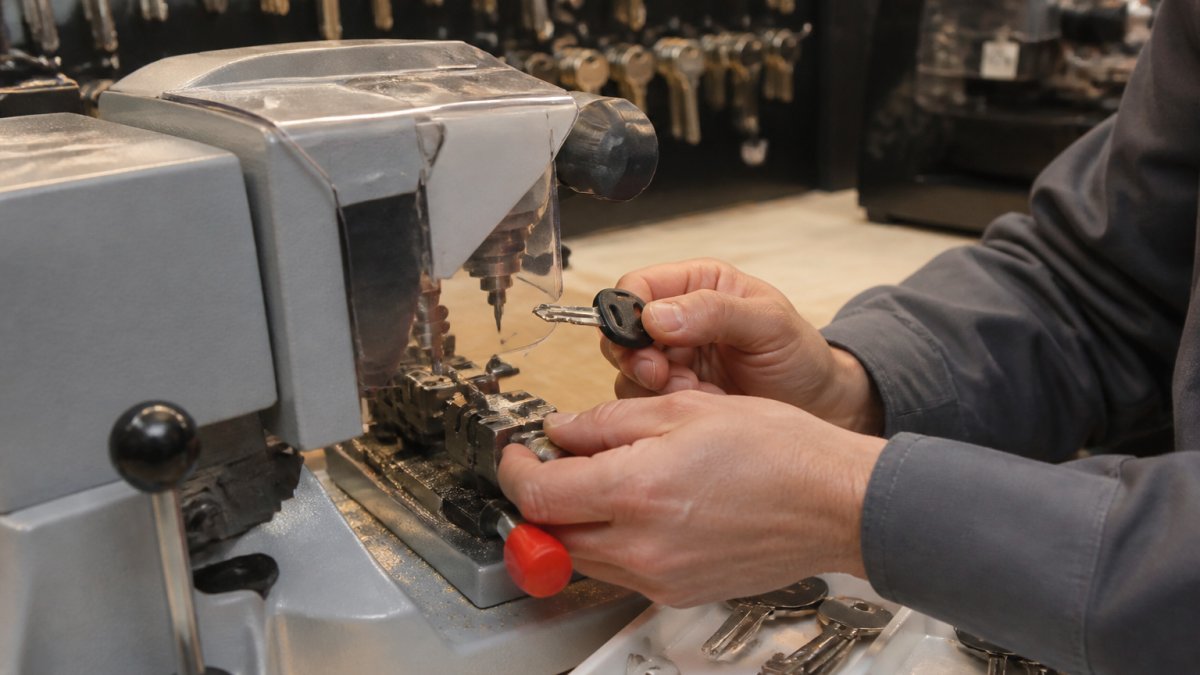
Key duplication and replacement keeps you prepared.
Lock repair addresses wear, damage, or malfunction, a lock that sticks, won't turn smoothly, or won't hold a key.
Lock replacement becomes necessary when repair isn't practical or when you want higher security.
Rekeying and master key systems work for rental properties or situations where multiple people need access.
Commercial Locksmith Solutions
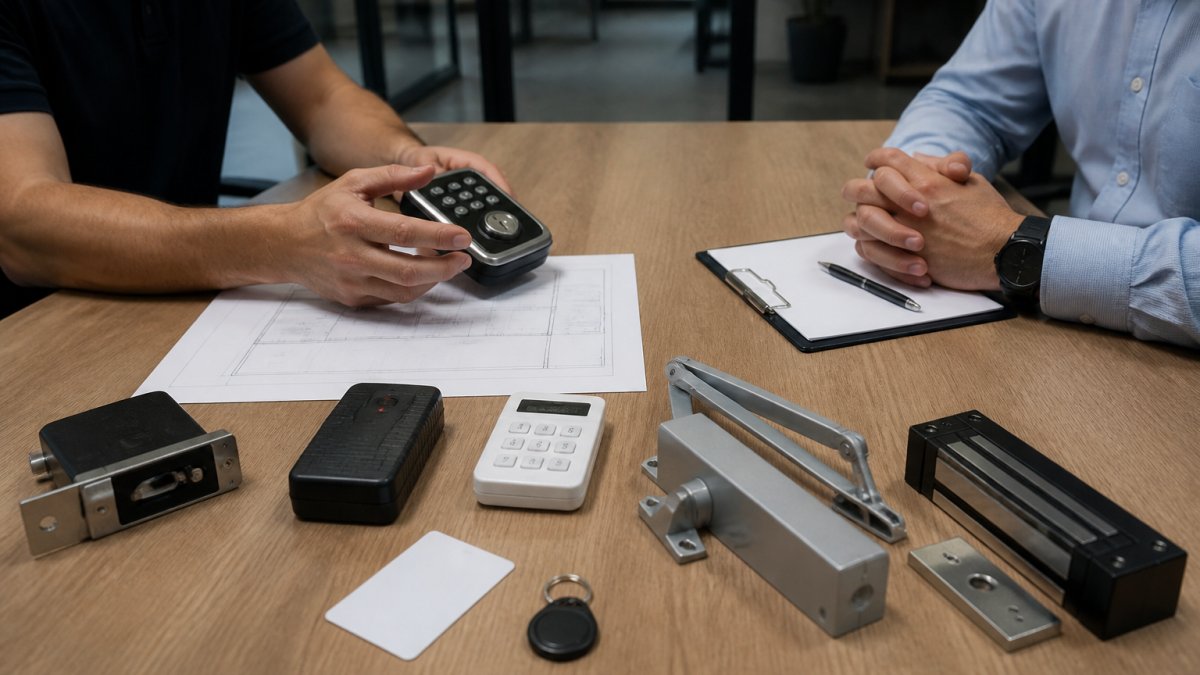
Commercial properties need systems that control access, simplify management, and scale as the company grows.
Master key systems are the backbone of commercial security: managers access all areas with one key while employees access only their assigned spaces.
Access control and keyless entry reduce reliance on physical keys and their liability.
Door repair and lock maintenance keep commercial properties secure and functional.
Custom gate fabrication secures property perimeters.
High-security locks and hardware protect assets in commercial environments. Businesses handling cash, inventory, or sensitive information need locks that resist picking, drilling, and forced entry.
Alternatives to Roadside Assistance for Lockouts
Calling a local locksmith directly is often faster: they know the neighborhood and you speak directly with the provider, so communication is clearer.
DIY solutions are tempting but risky. Forcing a window, breaking a lock, or damaging a door costs far more than a locksmith call, and the risk of injury is real, especially from height or in bad weather.
A trusted locksmith on speed dial beats both roadside assistance and DIY panic. Save the number of a reputable local locksmith before you need it.
Emergency Response and Service Area Coverage
Emergency response times separate good locksmiths from great ones.
Service area coverage determines whether a locksmith can reach you at all.
24/7 availability is standard for emergency locksmith services, since lockouts happen at midnight, on weekends, and on holidays. A professional operates around the clock or clearly communicates which hours they cover.
Transparent pricing during emergencies is crucial. After-hours premium rates are normal, but they must be disclosed before arrival, not after. Hidden emergency surcharges erode trust when you're already stressed.
Service Type | Best For | Typical Availability |
Local locksmith | Fast response, direct communication | 24/7 for emergencies |
Roadside assistance | Covered costs, convenience | Variable, depends on membership |
DIY solutions | Budget constraints only | Immediate but risky |
Frequently Asked Questions
What should I ask a locksmith before hiring them?
Request their locksmith license, proof of insurance, and business registration. Ask about their response time, whether they charge a service call fee, and if they provide an itemized quote before work begins. A reputable locksmith will answer these questions directly and provide references or customer reviews.
How can I verify a locksmith's price before they arrive?
Call ahead and describe your specific situation (lockout, key duplication, lock replacement). Ask for a quote over the phone and confirm whether that includes the service call fee. Request an itemized estimate in writing when they arrive. Reputable locksmiths will provide transparent pricing breakdowns before starting work, not surprise charges after completion.
How quickly can an emergency locksmith arrive in Arleta?
Response times vary by provider and demand. Local locksmiths with service areas covering Arleta typically arrive within 30-60 minutes for emergency calls. Confirm the service area and average response time when you call. Locksmiths with multiple locations or mobile units in the San Fernando Valley generally respond faster than those traveling from distant areas.
What's the best way to find a reputable locksmith?
Check for valid licensing, insurance, and background verification. Read recent customer reviews on Google and the Better Business Bureau. Ask for references and verify the locksmith has experience with your specific need (residential, automotive, commercial). Avoid locksmiths who quote prices over the phone without details, pressure you into immediate decisions, or operate without clear business identification.
Choosing the best locksmith services in Arleta comes down to finding someone licensed, insured, and transparent about pricing. Emergencies happen, a professional locksmith you can trust makes all the difference. Plaza Lock brings over 30 years of experience in residential and commercial security, with expertise in high-security locks, access control, and custom solutions. Get a free estimate today and see how we can enhance your property's security with sincere, reliable service.
Get A Free Estimate
Comments