


Alternatives to Standard Residential Locks: 2026 Guide
Table of Contents
Why Standard Residential Locks Fall Short
Smart Locks for Homes: Convenience Meets Control
High-Security Residential Locks That Resist Picking and Bumping
Keyless Entry Door Locks: Who They Suit and Who They Don't
Rekey vs. Replace Locks: Which Makes Sense for Your Home
Comparing Alternatives to Standard Residential Locks
What to Consider Before Upgrading Your Locks
Frequently Asked Questions
Last Updated: October 20, 2026
Why Standard Residential Locks Fall Short
Most homeowners never think about their locks until something goes wrong. That is the problem. A standard builder-grade deadbolt is designed to meet a minimum code requirement, not to stop a determined intruder, and it often fails at the two jobs that matter most: resisting forced entry and resisting covert manipulation.
The two techniques that defeat cheap locks are well documented by the National Institute of Justice and by lock manufacturers themselves. Bumping uses a specially cut key that, when struck, causes the pins to jump and the cylinder to turn. Picking exploits loose tolerances and soft metals. Builder locks typically use both.
There is also the key-control problem. Standard locks often share keyways, so a neighbor or a previous owner may hold a key that still works. When you buy a home, you inherit every copy ever made.
At Plaza Lock, we have rekeyed and replaced residential hardware across Los Angeles County since 1987, and the pattern is consistent: the lock that came with the house is the weakest point in the door. Below, we break down the real alternatives, who each one suits, and where each falls short.
Smart Locks for Homes: Convenience Meets Control
Smart locks for homes replace the key with a code, a phone, or a fingerprint, and they solve a problem traditional locks cannot: remote access control. You can let a contractor in while you are at work, issue a temporary code to a dog walker, and see a log of every entry.

The trade-off is real. Smart locks depend on batteries, wireless protocols, and firmware. A dead battery locks you out just as effectively as a lost key. Cheaper models can be vulnerable to relay attacks, and any lock tied to an app is only as secure as that app.
Best for: Rentals, second homes, and households with frequent visitors. Where it falls short: Power outages, network failures, and the learning curve for less tech-comfortable family members.
A common mistake is buying on price alone. The lock is the one piece of smart-home gear an attacker can physically reach, so the radio security matters as much as the app.
High-Security Residential Locks That Resist Picking and Bumping
High-security residential locks are engineered specifically to defeat the techniques that beat standard cylinders. They use restricted keyways, hardened steel inserts, and sidebars or magnetic pins that make bumping and picking far harder.
The Underwriters Laboratories UL 437 standard defines the benchmark for high-security cylinders, and it is worth asking whether a lock carries that rating before you buy. Restricted keyways also solve the key-control problem: blanks are controlled, so copies can only be made by an authorized dealer with a registration card.
What most guides miss is that the lock is only half the system. A high-security cylinder in a hollow door frame with a short strike plate still fails under a kick. The hardware has to match.
Best for: Primary residences, homes with valuable contents, and anyone who has been burglarized before. Where it falls short: Cost and convenience. Restricted keys mean a lost key is a trip to the dealer, not a hardware store.
Watch Out Installing a high-security cylinder without reinforcing the strike plate and door frame leaves the weakest link untouched. An intruder will simply attack the frame instead of the lock.
Keyless Entry Door Locks: Who They Suit and Who They Don't
Keyless entry door locks remove the physical key entirely, using a keypad, keycard, or biometric reader. They are the most convenient option for households with children, caregivers, or service providers who need regular access without a key handoff.
They suit some homes better than others. A keyless lock on a front door used by a large family is a genuine upgrade. The same lock on a back door in a high-traffic rental can become a maintenance headache when codes are not rotated.
Who they suit:
Families who want to stop hiding keys under the mat
Landlords managing turnover between tenants
Households with caregivers or cleaners who need scheduled access
Who they don't:
Anyone in an area with unreliable power and no backup
Properties where the door hardware is old and cannot support the electronics
Users who want zero app dependency
The honest limitation: every keyless system has a mechanical override, and that override is a physical key. If you lose it, you are back to calling a locksmith.
Rekey vs. Replace Locks: Which Makes Sense for Your Home
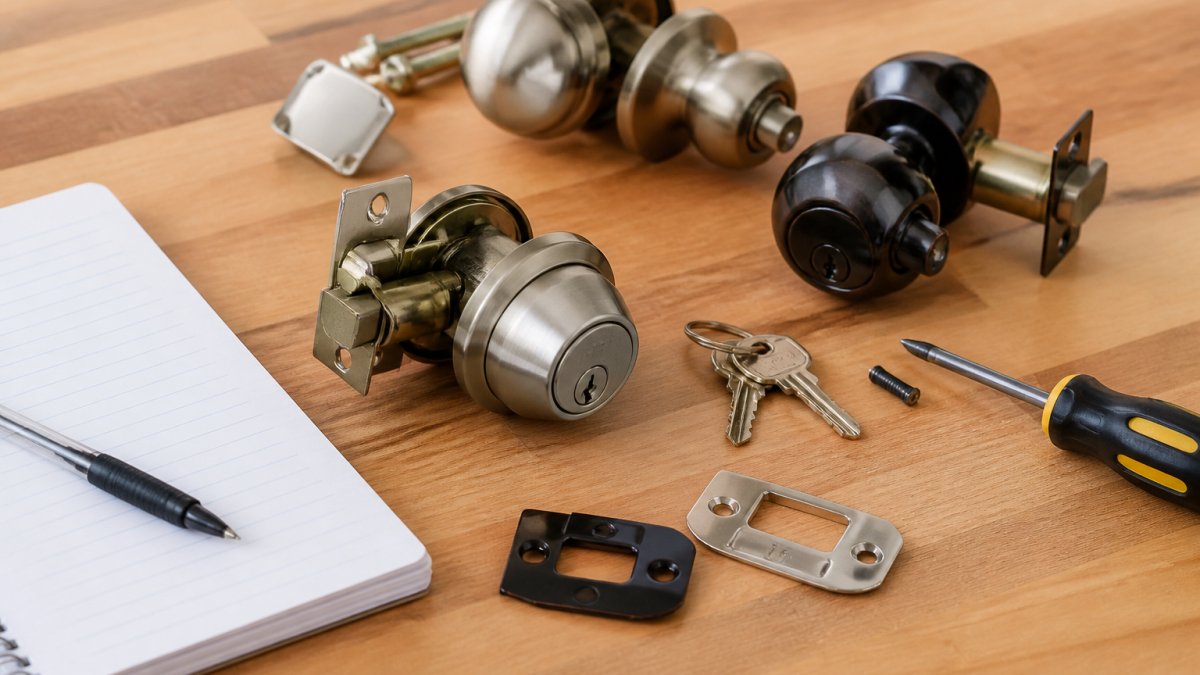
Rekeying changes the pins inside an existing lock so old keys stop working, while replacing swaps the entire lock and cylinder for new hardware. Rekeying is the cheaper, faster option when the hardware is sound; replacing is the right call when the lock is worn, low-grade, or you want upgraded security features.
Situation | Rekey | Replace |
Just bought the home | Yes | Only if hardware is worn |
Lost a key | Yes | No |
Tenant moved out | Yes | No |
Lock is builder-grade | No | Yes |
Want smart or keyless features | No | Yes |
Hardware is damaged or loose | No | Yes |
The rekey vs. replace locks decision usually comes down to one question: is the existing hardware worth keeping? If it is a solid deadbolt in good condition, rekeying gives you fresh key control for a fraction of the cost. If it is a flimsy cylinder, rekeying just puts new pins in a weak lock.
Pro Tip After buying a home, rekey every exterior lock on day one. You have no idea how many copies of the old key exist. Rekeying is faster and cheaper than replacing, and it restores full key control immediately.
Comparing Alternatives to Standard Residential Locks
Here is how the main alternatives stack up against each other and against the standard lock they replace.
Option | Security | Convenience | Ongoing Cost | Best For |
Standard lock | Low | High | None | Nothing, upgrade it |
Smart lock | Medium to high | Very high | Batteries, app fees | Rentals, frequent visitors |
High-security lock | Very high | Medium | Key replacement | Primary homes |
Keyless entry | Medium to high | High | Batteries | Families, landlords |
Rekey existing | Unchanged | High | One-time service | New homeowners |
The comparison makes one point clear: there is no single best alternative. A high-security lock wins on raw resistance but asks you to give up key convenience. A smart lock wins on control but adds a power dependency. The right choice depends on what you are protecting and who needs access.
For most homeowners in our service area, the strongest practical combination is a high-security cylinder on the primary entry doors and a smart or keyless lock on secondary doors where convenience matters more.
What to Consider Before Upgrading Your Locks
Before you buy anything, check three things: the door itself, the frame, and your insurance requirements. A lock is a system, and the door is part of it.
Door and frame condition. A solid core or metal door with a reinforced frame holds up far better than a hollow door with a thin strike plate. If the frame is soft or the door is hollow, spend on reinforcement before you spend on a fancier cylinder.
Key control. If you have ever lost a key or handed one to a contractor, restricted-key hardware solves the problem permanently. Ask whether the lock uses a controlled keyway.
Insurance and code requirements. Some policies and local rental codes specify hardware standards. Check with your insurer and, for rentals, your local building department before you commit. The Consumer Financial Protection Bureau publishes guidance on home-related financial products, including how to evaluate security upgrades against your budget.
Installation quality. The best lock installed badly is worse than a mid-grade lock installed correctly. Misaligned strikes, loose screws, and stripped holes are the most common causes of lock failure we see.
Key Takeaway Upgrade the door and frame before the cylinder. A high-security lock on a weak door is money spent on the wrong end of the problem.
If you are unsure which path fits your property, a professional assessment is worth the visit. Plaza Lock offers free estimates and can tell you in minutes whether your existing hardware is worth rekeying or should be replaced.
The right alternative depends on your door, your budget, and who needs access. Standard locks leave you exposed to bumping, picking, and lost-key risk, and the fix is rarely a single product. Plaza Lock has helped homeowners and property managers across Los Angeles County secure their properties since 1987, combining traditional craftsmanship with high-security locks, access control, and custom gate fabrication. Our team holds both a contractor and locksmith license, and we answer the phone with real information, every time. Get a free estimate from Plaza Lock and secure your home with hardware that actually holds up.
Frequently Asked Questions
Are smart locks more secure than traditional deadbolts?
It depends on the model. A well-made smart lock with a Grade 1 or Grade 2 ANSI/BHMA rating and a hardened strike plate can match or exceed a basic builder-grade deadbolt. The weak point is often the door frame, not the lock. Look for models with physical key backup, encrypted wireless communication, and tamper alarms. Cheap smart locks with flimsy latches can be less secure than a solid mechanical deadbolt, so check the rating before buying.
What is a high-security residential lock, and how is it different from a standard lock?
High-security residential locks use restricted keyways, hardened steel inserts, and pick-resistant pins that make key duplication and bumping much harder. Standard builder locks often use common keyways that any locksmith or hardware store can copy. Brands in this category typically require an authorization card to cut replacement keys. They cost more upfront, but they close the most common bypass methods used in residential break-ins.
Is rekeying a lock a better option than replacing it?
Rekeying costs less and keeps your existing hardware, which makes sense if the locks are in good condition and already meet your security needs. Replacing is the better call when the hardware is worn, builder-grade, or you want smart or high-security features. A locksmith can assess the cylinders and strike plates and tell you which route gives you more security per dollar.
Can a locksmith install a smart lock on an existing door?
Yes, most smart locks are designed to fit standard door prep, so a locksmith can usually install one on an existing door without major modification. The job may require adjusting the deadbolt bore or strike plate if the door has settled. A licensed locksmith can also confirm the door and frame can handle the lock's weight and torque before installation, which avoids callbacks.
Get A Free Estimate
Comments