


Commercial Access Control System Pricing: 2026 Guide
Table of Contents
What Commercial Access Control System Pricing Includes
Commercial Access Control System Cost Per Door Breakdown
Hardware costs per access point
Installation and labor per door
Cloud-Based Access Control Pricing vs. On-Premises Systems
Access Control System Monthly Fees and Recurring Costs
Software licensing and subscriptions
Support, maintenance, and monitoring
Factors That Affect Commercial Access Control Pricing
Building size and number of doors
Existing infrastructure and retrofit complexity
System type and technology choices
Access Control System Quote Checklist and Comparison
What to evaluate in vendor proposals
Five-year total cost of ownership
How to Get an Accurate Commercial Access Control Quote
Frequently Asked Questions
Last Updated: October 17, 2026
What Commercial Access Control System Pricing Includes
Commercial access control system pricing covers far more than door hardware. Most property managers underestimate the full scope of costs, then face surprise invoices during implementation. Knowing what's bundled into a quote, and what isn't, is the first step to comparing vendors accurately.
A complete commercial access control system pricing structure includes physical hardware (card readers, keypads, electric locks), the controller that manages access logic, software licensing for the management platform, installation labor, system configuration, and ongoing support. Many quotes also factor in integration with existing security infrastructure like video surveillance or alarm systems.
A $50-per-door quote and a $120-per-door quote might reflect entirely different service levels: one includes five years of software updates and 24/7 support, the other charges annual licensing fees and pay-as-needed support. Without itemization, you're comparing apples to oranges.
Pro Tip Request itemized quotes that break costs into hardware, installation, software licensing, and support separately. This transparency makes it far easier to identify where vendors differ and which add-ons justify premium pricing.
Commercial Access Control System Cost Per Door Breakdown
Hardware costs per access point
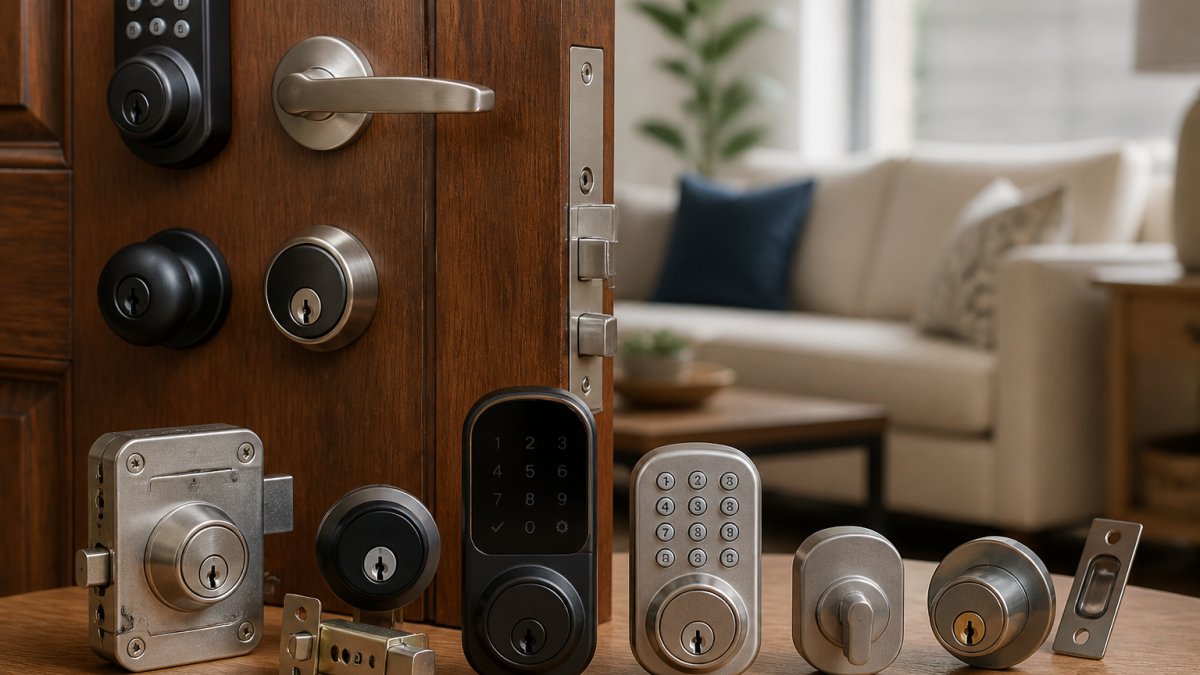
Hardware represents the largest single component of per-door pricing. A typical access point includes a card reader or keypad, an electric lock or strike mechanism, and a door controller.
Card readers range from basic proximity cards to mobile credential readers. Proximity readers cost less upfront but offer fewer features; mobile credential readers cost more but eliminate physical cards.
Electric locks come in two types: electromagnetic locks (mag locks) and electric strikes. Mag locks are simpler to install on existing doors but fail open during power loss (a security liability).
Door controllers process credential reads and trigger locks. Networked controllers cost more but offer real-time reporting and remote management; standalone controllers are cheaper but require on-site programming and don't report status remotely.
Installation and labor per door
Installation labor is where retrofits diverge sharply from new construction. New buildings with pre-planned access control infrastructure cost less per door because electricians run wiring during construction. Retrofits require drilling, running conduit through walls, and integrating with existing door frames, all significantly more labor-intensive.
A single door retrofit typically requires 2-4 hours of skilled labor: assessing existing hardware, removing old locks, installing the new reader and strike, running power and data wiring, testing, and configuring the device. Complex installations, glass doors, fire-rated frames, or unusual hardware take longer.
Labor costs vary by region and contractor expertise. Experienced technicians familiar with your building work faster and catch integration issues before they become expensive. Cheaper labor often means slower timelines and higher misconfiguration risk.
Watch Out Avoid the temptation to use general electricians for access control installation. Specialized technicians understand access control logic, fail-safe requirements, and integration points that general electricians may overlook. A $200 mistake in configuration can cost thousands in security gaps or system downtime.
Cloud-Based Access Control Pricing vs. On-Premises Systems
Cloud-based and on-premises systems represent fundamentally different cost structures. Cloud systems charge recurring fees for software hosting, remote management, and cloud storage of access logs.
Cloud-based systems spread costs over time: you pay less upfront but commit to monthly fees indefinitely.
On-premises systems front-load costs into hardware and installation but offer lower long-term expenses. You purchase and manage a server on-site (or contract a managed service provider).
The decision hinges on facility size, IT infrastructure, and tolerance for maintenance. Small facilities (under 50 doors) often benefit from cloud systems because the upfront cost is prohibitive and providers handle updates and backups.
Hybrid approaches exist too: on-premises controllers with cloud-based reporting combine local control with remote monitoring convenience. These typically cost more than pure on-premises but less than full cloud systems.
Access Control System Monthly Fees and Recurring Costs
Software licensing and subscriptions
Software licensing is where many property managers encounter unexpected ongoing expenses. Beyond the initial purchase, most modern systems charge monthly or annual fees for software access, cloud storage, and features.
A typical commercial access control system software license costs $5-20 per door per year, depending on vendor and feature tier.
Cloud storage for access logs adds another layer of cost. A 100-door facility generating thousands of daily access events can accumulate terabytes annually. Cloud providers typically charge $0.50-2 per door per month for log storage and retrieval.
Mobile app access, allowing property managers or security personnel to grant temporary access, view real-time alerts, or unlock doors remotely, is often a separate line item. Expect $2-5 per user per month for mobile access features.
Support, maintenance, and monitoring
Support contracts define how quickly vendors respond when something breaks. Most vendors offer tiered support: basic (24-48 hour response), standard (4-8 hour), and premium (1-hour). Basic support typically costs 5-10% of annual software licensing fees; premium support can cost 20-30%.
Maintenance includes firmware updates, security patches, and preventive inspections. Many vendors bundle these into annual contracts costing $500-2,000 per year depending on system size and complexity. Without a contract, you pay per service call, typically $150-300 per hour plus parts.
Monitoring services, where a third party watches for system failures, access anomalies, or security breaches, are optional but increasingly expected. Professional monitoring costs $15-50 per month and provides immediate alerts if a door fails to lock, an unauthorized access attempt occurs, or the system goes offline.
Factors That Affect Commercial Access Control Pricing
Building size and number of doors
The number of access points is the primary cost driver. A single-door installation costs far more per door than a 500-door enterprise system because fixed costs (design, configuration, testing) are spread across fewer units.
A 10-door facility might pay $150-250 per door installed. A 100-door facility might pay $80-150 per door. A 500-door facility might pay $50-100 per door. The economies of scale are substantial.
Building size also affects wiring and infrastructure costs. A multi-story office building requires conduit through walls, coordination with existing electrical systems, and long cable runs; a single-story retail building may have simpler requirements. Older buildings with concrete walls or asbestos-containing materials require specialized drilling and cost more to retrofit.
Existing infrastructure and retrofit complexity
Retrofit projects consistently cost more than new installations. Existing door frames may not accommodate new hardware without modification, electrical systems may need upgrades for new power demands, and network infrastructure may need expansion or security hardening.
A building with modern network infrastructure, ample electrical capacity, and standard door frames costs less to retrofit than one with aging infrastructure. Some retrofits require structural modifications, reinforcing door frames, upgrading electrical panels, or installing new conduit runs, that can double or triple installation costs.
Legacy systems create additional complexity. If you're replacing an older mechanical lock system with modern electronic access control, you're starting from zero. If you're upgrading an existing electronic system, you might reuse some components, reducing costs.
System type and technology choices
The technology you choose shapes both initial and recurring costs. Proximity card systems cost less than mobile credential systems; local controllers cost less than networked, cloud-managed controllers; basic door locks cost less than integration with video surveillance, alarms, and visitor management.
Advanced features add cost at every level. Biometric readers cost 2-3 times more than card readers. Integration with building management systems, HVAC controls, or occupancy sensors requires custom configuration and ongoing support. Real-time notifications, advanced reporting, and HR integration add licensing costs.
The choice between fail-safe and fail-secure operation also matters. Fail-safe systems unlock doors during power loss, prioritizing life safety. Fail-secure systems remain locked, prioritizing security. Fail-secure systems require backup power (batteries or generators) to remain operational during outages, adding cost.
Access Control System Quote Checklist and Comparison
What to evaluate in vendor proposals
A strong vendor proposal itemizes every cost component and distinguishes one-time from recurring expenses. Use this checklist when reviewing quotes:
Hardware list with model numbers and per-unit costs for readers, locks, and controllers
Installation labor broken down by door type (standard, glass, fire-rated, etc.)
System design and configuration fees
Software licensing costs (annual, per-door, per-user)
Cloud storage or on-premises server costs
Mobile app access fees
Professional monitoring (if included)
Support and maintenance contract terms
Warranty coverage and duration
Timeline for installation and go-live
Training for your staff
Integration with existing systems (video, alarm, visitor management)
Scalability plan if you add doors later
Cybersecurity features and compliance certifications
A complete proposal should also specify what happens after year one. Do software licenses renew automatically? Are support costs locked or subject to increase? What's the upgrade path if you add new doors?
Five-year total cost of ownership
Comparing vendors on installation cost alone misses the bigger financial picture. A vendor with lower installation costs might charge significantly more for software licensing or support, making them more expensive over five years.
Calculate the five-year total cost of ownership by adding:
Initial hardware and installation costs
Year 1 software licensing and support
Years 2-5 software licensing and support (account for annual increases)
Monitoring and maintenance contracts
Planned upgrades or expansions
This comprehensive view reveals which vendor offers the best long-term value. A vendor charging $100 per door installed but $15 per door annually for software might be more expensive over five years than a vendor charging $120 per door installed with $5 per door annually for software.
Cost Component | Year 1 | Years 2-5 (Annual) | Five-Year Total |
Hardware & Installation | $X | $0 | $X |
Software Licensing | $Y | $Y | $Y + (4 × $Y) |
Support & Maintenance | $Z | $Z | $Z + (4 × $Z) |
Monitoring | $M | $M | $M + (4 × $M) |
Five-Year Total |
|
| $X + 5Y + 5Z + 5M |
How to Get an Accurate Commercial Access Control Quote
Getting an accurate quote requires giving vendors specific information about your facility, security requirements, and timeline. Vague requests produce vague quotes that don't reflect real costs.

Next, clarify your security requirements. Do you need fail-safe or fail-secure operation? Should the system integrate with video surveillance or alarm systems?
Specify your timeline.
Request itemized quotes from at least three vendors. Require hardware models, per-door costs, labor estimates, software licensing terms, and support options.
At Plaza Lock, we've guided hundreds of commercial property managers through this process.
Getting accurate pricing for a commercial access control system requires understanding what costs you'll actually pay, not just the headline per-door figure.
Frequently Asked Questions
What is the typical cost per door for a commercial access control system?
Per-door costs vary based on hardware, installation complexity, and system type. Pricing depends on whether you're upgrading existing infrastructure or starting new, the credential type (card, keypad, mobile), and labor rates in your area. A professional assessment determines your exact per-door estimate. Contact Plaza Lock for a free estimate tailored to your building's specifications.
Is cloud-based access control pricing cheaper than on-premises systems?
Cloud-based access control pricing typically includes lower upfront hardware costs but higher monthly subscription fees. On-premises systems require larger initial investment but lower recurring costs over five years. Total cost of ownership depends on your building size, number of doors, and how long you plan to operate the system. Evaluate both lifetime expenses, not just installation price, when comparing options.
What ongoing fees should I expect for an access control system?
Access control system monthly fees typically include software licensing, cloud storage (if applicable), technical support, and system monitoring. Maintenance and credential management may add to recurring costs. Some providers bundle these; others charge separately. Request an itemized breakdown of all monthly and annual fees from vendors to compare total cost of ownership accurately and avoid surprise expenses.
What should I include in an access control system quote checklist?
Your access control system quote checklist should cover hardware costs, per-door installation labor, software licensing, monthly subscription fees, integration with existing locks and wiring, video surveillance if needed, compliance requirements, support and maintenance, and warranty terms. Request itemized pricing for each component. Compare at least two quotes side-by-side, calculating five-year total cost of ownership rather than installation price alone.
How do building size and number of doors affect access control pricing?
Building size and number of doors directly impact hardware quantity, wiring complexity, and labor hours. Larger buildings with more doors require more readers, controllers, and credentials, increasing costs. Retrofit installations in existing buildings cost more than new construction because of wiring and infrastructure modifications. A professional site assessment determines your exact configuration and cost based on your building's layout and current security setup.
Get A Free Estimate
Comments